Monkey Monday - May 29th, 2025
Beyond the Storefront: Crafting the whole journey that converts
What's in this video?
In this talk, Matt from Rusty Monkey shares a story about his frustrating attempt to buy windows online. The poor design of the website, complete with Comic Sans and starbursts, instantly put him off and damaged trust. Yet he eventually found a company with a much better user experience, using helpful videos and clever systems to avoid mistakes. His takeaway was that user experience often outweighs design.
Matt points to brands like Patagonia, Dr Martens and Supreme to show how strong branding, scarcity or authenticity can overcome design flaws. He stresses that brand, user experience and interface are all connected, and success comes from balancing the three.
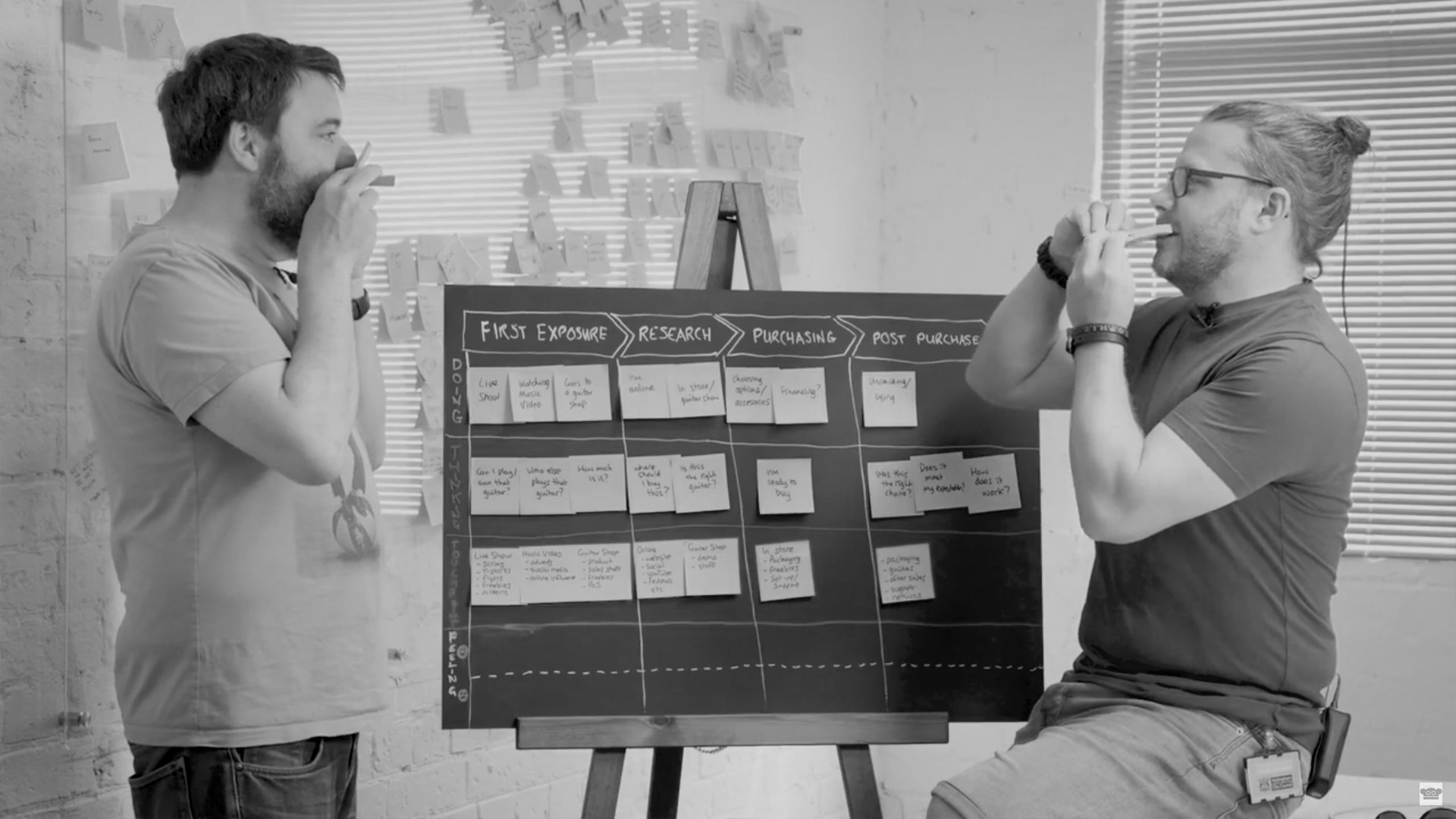
To help businesses put this into practice, he introduces a customer journey mapping workshop that can be completed in a day. By tracking customer touchpoints and their thoughts and feelings at each stage, businesses can spot and fix negative moments. Even small touches, like including a free teabag, can lift the experience, build loyalty and turn customers into brand advocates.
NEED HELP WITH YOUR BUISNESS
Transcript Show / Hide
Maybe your audience visits art galleries. That opens up opportunities—handouts, digital displays, tube station ads, branded gift shop items, even custom prosecco labels if that’s their thing! This exercise exposes: Weak touchpoints that need improving Strong ones you can elevate Entirely new ones you never thought of Now, let’s go back to my window-buying journey. My first exposure? Terrible. So bad I left immediately. But because every other competitor was just as bad, I came back. Their saving grace? The journey itself.
They had great social proof. Their content answered all my questions. I felt reassured by the time I hit “Buy.” Then came post-purchase remorse. You know that sinking feeling? “Did I really just spend all that money?” They managed it okay. Decent follow-up emails. Clear delivery info. Not amazing—but not terrible. Then came the installation. I was cold. Tired. Covered in plaster dust. Feeling unsure and not very confident. And here’s where they missed a golden opportunity. They didn’t need to do much—but they did nothing. What if they’d sent me a Spotify playlist for the install? Or better yet: A free teabag. That’s it. A single tea bag. That tiny gesture, at the right moment, would have made me feel seen and appreciated. Or gloves if it’s cold. Suncream if it’s hot. Think about what your customers are doing with your product—and how you can elevate that moment. As for my final experience? The windows work. I’m happy. But not brand advocate happy. Not five-star review happy. And they were so close. If they’d just fixed the terrible website and sent me a free tea bag, I would’ve told everyone how amazing they were. Now, let’s talk why this matters. We’ve got stats (from the very reputable justandwindowsuk.com!) that show: Companies with strong customer experience drive 4–8% more revenue They outperform competitors by 80% Loyal customers are 5x more likely to repurchase, 4x more likely to refer 32% of people will walk away after one bad experience It takes 12–13 positive experiences to undo the damage of a single negative one And remember: you don’t have to fix everything at once. Start small. Focus on one journey—like post-purchase or checkout. Even recruitment can be mapped as a customer experience. This isn’t a one-time exercise. It’s a mindset. If nothing else, give away free tea bags. You’ll make me happy—and maybe build a better brand in the process. Thank you very much.