Monkey Monday - February 7th, 2022
Growth goals and getting your team on the same page
Rebranding is a great way to instigate business growth. Before you embark on a rebranding journey, it’s important to find out if your whole team is on the same page. If some people are ready for growth, but others are not, then you need to do some internal work to make sure you all have the same vision for your company before you make any big changes.
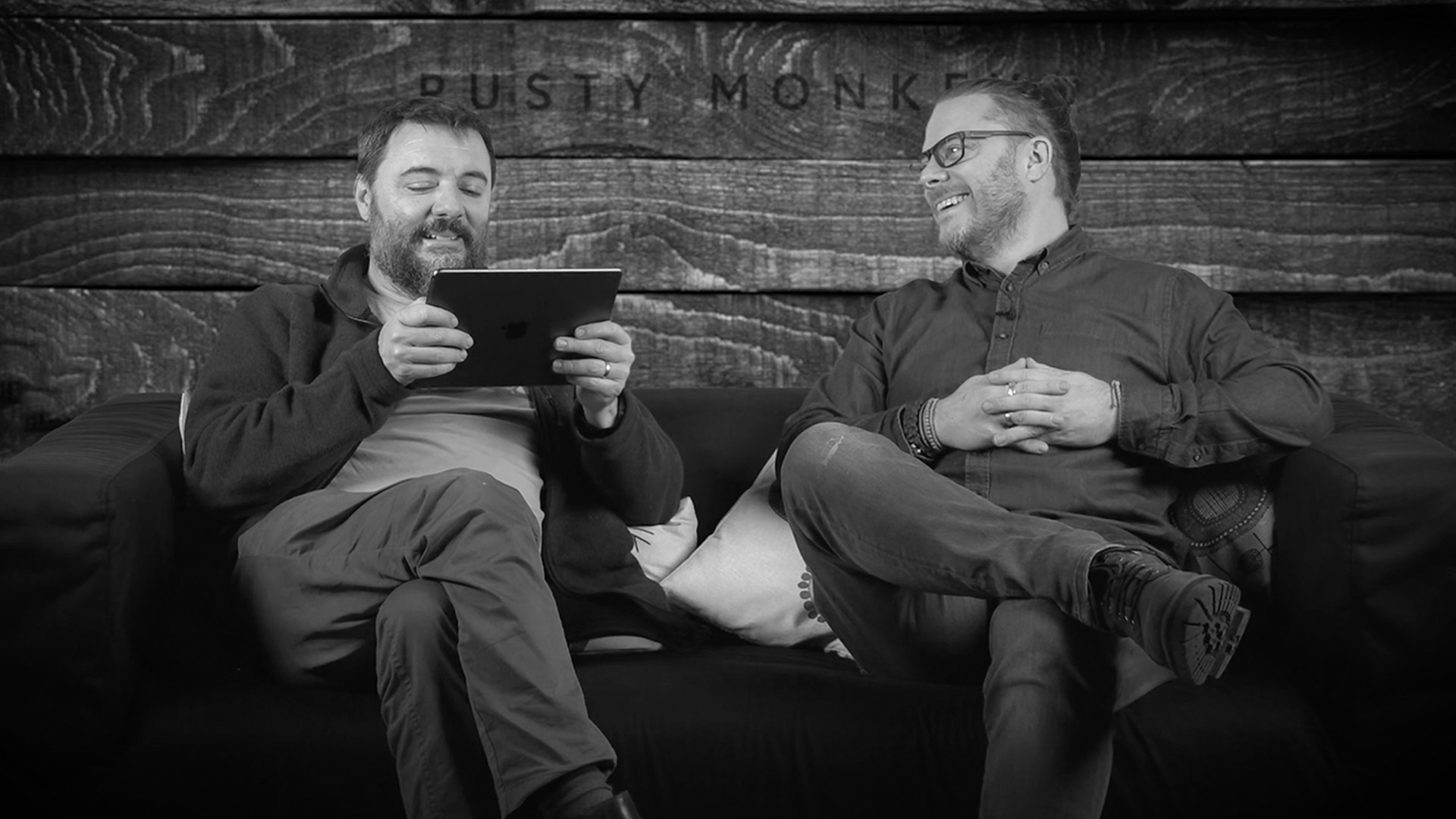
In today’s vlog, Chris shows Matt a cool exercise we’ll be bringing in to our branding workshops to help you and your team understand your individual expectations of your organisation’s growth.
It’s something you can do together today. Why not get your whole team in a room and have a bit of fun with it? Let us know your results.
If you’d like to start your branding or rebranding journey, get in touch to book a free 1 hour workshop with Matt and Chris to chat vision, goals and next steps.
Need direction?
Transcript Show / Hide
Ain't no party like a Chris Goor party. I'm just working on some new themes, just for Chris.
Ah thanks, that's a really good.
Yeah, I was influenced by S Club 7.
Oh, I didn't didn't get that.
Ah well.
And I worked with S Club 7 on Top of the Pops in 1998.
Chris is such a media guy, aren't you. I know Gary Linekar.
No I don't.
Okay. Fair enough.
Anyway. I've been in my philosophy den over Christmas. And I've been thinking of new things we can put in our workshops. What do you think of my philosophy den?
I just love the idea that you have a little philosophy den, yeah.
So I've been trying to try, well, we've been doing workshops with customers and I've been wondering about the start of the process and where people are on that journey of wanting to do some rebranding, wanting to change the direction of a company and thinking about what the problems are and how we can overcome them. And I've come up with a new tool, which we're going to be putting into our workshops and I'm going to try it on Matt now. You're going to be a complete Guinea pig.
All right.
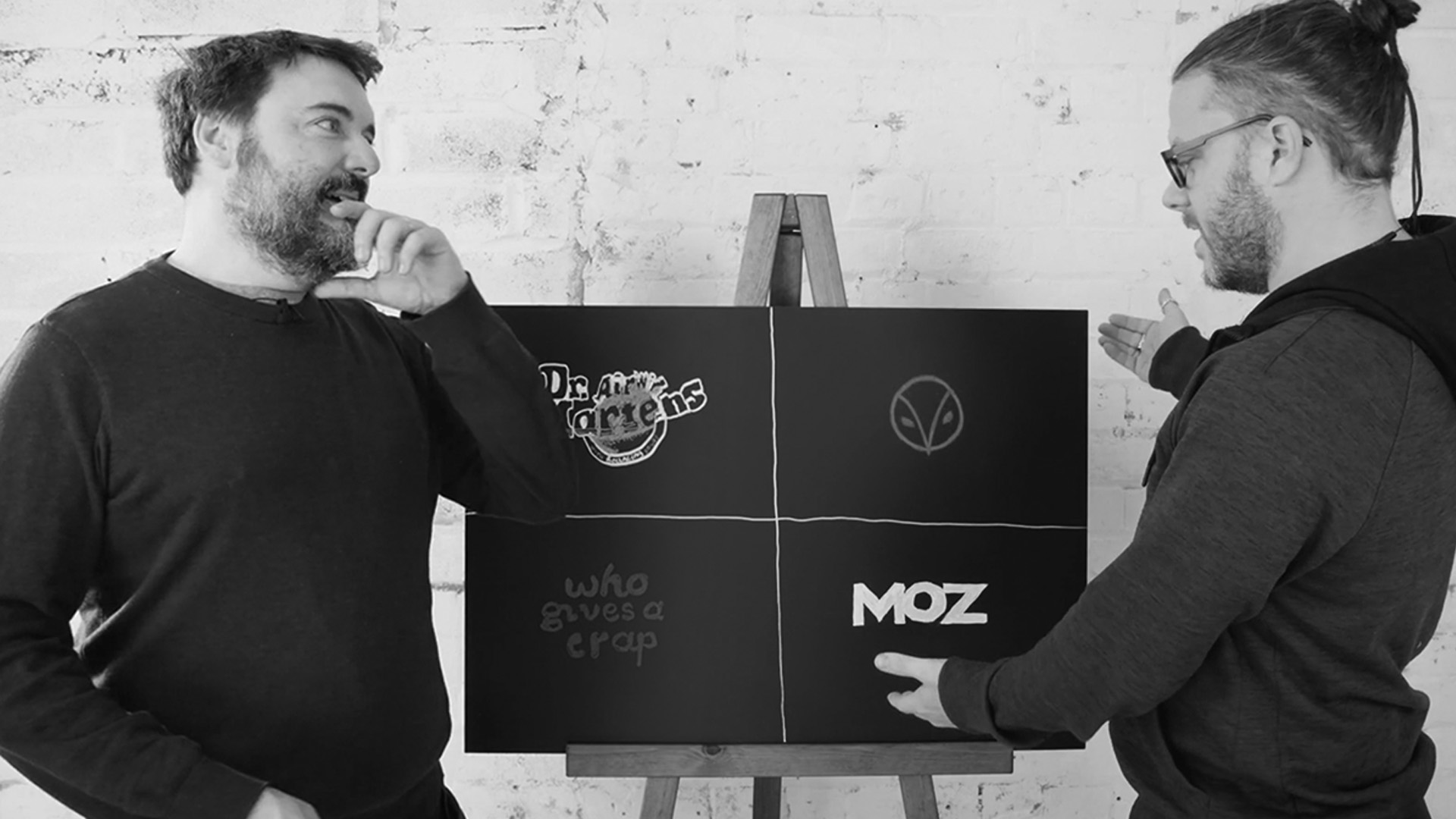
I'm going to give you a pen and a tablet thing, and I'm going to say, right, you can follow along with this wherever you are, if you grab a pen and paper and just do a graph, which is time on the X axis and growth, any metric, I'm going to say, you can think about it in your head as like turnover or amount of people or just how well you think things are going. It could be anything, but I want you to draw a line of Rusty Monkey's growth over time, and then put a dot where you think we are at the moment.
From the beginning of Rusty Monkey?
Can be whatever you want. Right. Here we go. I'm not looking.
All right. Held down too long. Right, I'll do it in bits then. Okay. A bit like that..
Okay. Now swipe to create a new page. Okay. Right. I'm going to, I'm going to draw one. Okay. I, I think let's see where we are. I think...
Oh, I didn't put where I was on it.
Okay. You can do that.
All right.
Right. Oh, look at this. They're very different. That's great. Right. Okay. Now using the pen, you can, you can annotate because that's now a laser pen. So talk me through your graph.
Well, this is where we kind of started. And we kind of grew for a bit. And then we have these periods of sort of stability. And then we have a bit of creative destruction. We smash some things around and we launch a new site, we launch new services and we grow a little bit. So you could definitely see if you look back in time, how we kind of had these points in time, where we had little spurts and I think we've definitely been growing over the last little bit. And I think we're here and I think we may have a real sharp bit this year and then some continuous growth after that. There you go.
Wow.
That was my, did I do the job right?
Yeah, you did. You did it very well because I'm also, I I've done a sort of very long term kind of thing that... We've been going for 20 years, nearly, 19, 20 years. And I've gone well, we've been growing quite slowly and steadily up to that point. And it's starting to have a sort of real incline as we've learned all we need to, and I think we're putting some bigger things into practice. So I think obviously we're going to go like exponentially big, but it's interesting because they're sort of similar in a way. We can see that both of us are going there is going to be an upsurge in something happening. But if you imagine, if you did this with a different group of people and the graphs were wildly different and someone's got a straight flat line or someone's line goes down or they think, or they're, they're on, they're on a journey where the, the line does stay still. They're not ready for change. They're not ready for something to happen. We're both ready for some growth to happen. And for some growth to happen, things have got to change. But if everyone is on the same page, then it's good for you as a business because you know that you're going to succeed. But if all those graphs are wildly different, then you know, you've got some work to do before you start pushing the pedal to go, okay, we're going to change direction and do X, Y, and Z. So I think it's just an interesting talking point where you can get eight to 10 people in a room doing this graph work before you even start on any rebranding journey because we've had some rebranding work we've done in the past where we've come to the end of it and people have gone well, I actually didn't really think it needed changing in the first place. Whereas we should have started with a process like this, where getting everyone on board within a company and getting everyone aware that things are going to be changing in the next little while and why that's happening and having some kind of north star where a company's heading to is really important.
Yeah. I think that's really interesting as well, because I know some other organizations I've chatted with have clearly said actually that they don't expect to grow in terms of kind of size and turnover, a heck of a lot. And they're not even particularly aiming to do that much, there's a little bit of growth they want to do, but actually over the next three to five years, what they really want is fewer customers that are paying more and the workforce is happier and they want to reduce the amount of work hours their team need to do. And, you know, with regards to the turnover and the profit, things are okay, but it's, it's stuff over here that they really want to change. So that's kind of really interesting because you automatically assume everybody wants this upward trajectory and perhaps some companies are in a different position than that. So I think getting everyone on an understanding of what they are aiming to do is really powerful. It's very good.
Well, I, I sort of also imagine, like in a business you're tying your tiny little bits of string to people, and if everyone is pulling in the same direction, you're going to do the same thing and head off in the right direction. But if you've got people thinking, like when I worked at the BBC, it was, I worked at the BBC Outside Broadcast and it was a commercial enterprise by that time, it all got sold off in the end, but the management team, they were thinking that it was one thing it was going to, we were the BBC Outside Broadcast. We were going to take over the world, but the the workers thought something completely different and thought that the business was failing up to the point where we had some managers. We had one manager from Wales, and I think another manager from Wales was just about to arrive. And they the top manager said I bet you wished they'd blow up the Severn Bridge, don't you and people said, yeah, we would do. It'd be, it'd be really good. And he said, I don't I don't know which side of the bridge you want me on. And someone piped up "in the middle", but at that point, everyone in that company was pulling in different directions and eventually it didn't go anywhere and it failed. So it's kind of, it's an interesting thing. You've got to get everyone going on that same journey.
So a pencil and paper, draw some graphs and then some string to tie up all of your team.
Cool let us know how you go on.
That was good, wasn't it. It's like the Fonz.
Eeeeee. Like the Fonz. That's a cultural reference from 1978.
We were two. We're still going. Anyway, subscribed to some stuff,buy our t-shirts.
I don't know if we do that, do we?
No, I dunno.
It doesn't matter.
We're still recording. It's just like the bonus track on the end of a CD.
I think so. We just have a really long ending, like Nirvana, they had that massive silence, then break into something. Goodbye.
Goodbye.